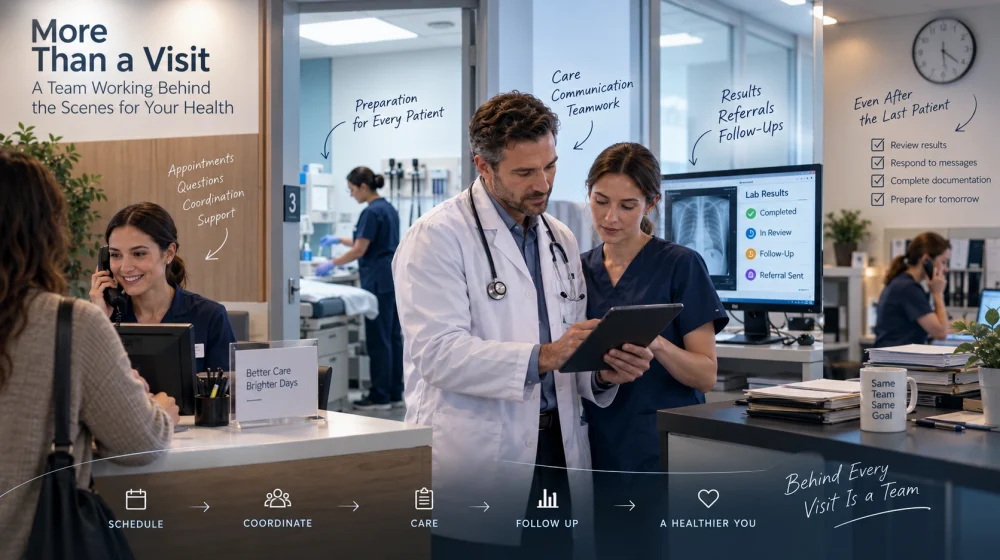
For patients, a clinic visit may seem simple: check in, meet a healthcare professional, receive recommendations, and leave. Behind that visible experience, however, medical teams are constantly coordinating schedules, records, tests, medications, referrals, and follow-up care. Efficient internal processes help clinics maintain patient safety while making every appointment as organized and comfortable as possible.
How the day begins before the first patient arrives
A well-organized clinic begins preparing long before the first patient walks through the door. Staff members review the day’s schedule, identify appointments that may require additional time or equipment, check messages received overnight, and make sure examination rooms are ready. Medical supplies may be restocked, devices checked, and workspaces prepared for the procedures expected that day.
Doctors and nurses may also review complex cases or discuss patients who require special attention. This preparation gives the team an opportunity to anticipate potential issues rather than reacting to them once the clinic becomes busy. A few minutes of coordination at the beginning of the day can prevent delays and communication problems later.
What happens at the front desk throughout the day
The front desk acts as an important coordination point between patients, clinicians, schedules, and administrative systems. While patients may mainly associate reception staff with checking in, their responsibilities extend throughout the entire working day.
- Managing appointments. Staff schedule new visits, reschedule existing appointments, handle cancellations, and help keep the daily calendar organized.
- Checking patients in. Reception teams confirm essential information and make sure the appropriate clinical staff know when patients have arrived.
- Handling calls and messages. Questions from patients must be directed to the right person, whether they concern scheduling, records, prescriptions, or medical follow-up.
- Managing documentation. Administrative staff may process forms, update contact information, and help ensure that necessary records are available.
- Coordinating patient flow. Front-desk employees communicate with clinical teams to reduce unnecessary waiting and respond when schedules change unexpectedly.
Because these activities happen simultaneously, effective communication between reception and medical staff is essential to keeping the clinic running smoothly.
How doctors and nurses prepare for each appointment
Clinical preparation often begins before the patient enters the examination room. Healthcare professionals may review the patient’s medical history, previous diagnoses, medications, allergies, laboratory results, imaging reports, and notes from earlier appointments. This information provides context and allows the clinician to focus more effectively on the patient’s current concerns.
Nurses or medical assistants may prepare the examination room and determine whether particular instruments or supplies will be required. Depending on the type of visit, they may also collect vital signs and update information about medications or symptoms. This preparation helps the physician begin the consultation with a clearer understanding of the patient’s situation.
What happens behind the scenes during a patient visit
Even while a patient is speaking directly with a clinician, several connected processes may be taking place to document and coordinate care. A modern appointment is not only a conversation; it is also part of a larger clinical workflow that connects medical information, decisions, and future actions.
- Information is collected. Symptoms, concerns, vital signs, medical history, and other relevant details are reviewed and documented.
- The clinician evaluates the situation. The doctor considers the available information, performs an examination when appropriate, and determines whether additional testing is needed.
- A care plan is developed. Recommendations may include treatment, medication, lifestyle changes, diagnostic tests, referrals, or further observation.
- Next steps are documented. Instructions, orders, prescriptions, and follow-up plans are entered into the appropriate systems so other members of the healthcare team can act on them.
Accurate documentation is particularly important because healthcare rarely depends on a single interaction. Information recorded during one visit may later be used by nurses, specialists, laboratories, pharmacies, or other clinicians involved in the patient’s care.
How test results, referrals, and follow-ups are coordinated
A patient’s care often continues long after the appointment itself has ended. If laboratory tests or imaging studies are ordered, the clinic needs a process for receiving and reviewing the results. Clinicians may then contact the patient, provide recommendations, request additional testing, or arrange another appointment depending on the findings.
Referrals require another layer of coordination. Relevant medical information may need to be transferred to a specialist, while the patient needs clear instructions about what to do next. Clinics may also track whether important follow-up appointments have been completed.
These processes are especially important when several healthcare professionals are involved. Clear responsibilities and reliable communication help reduce the risk that an important result, referral, or follow-up recommendation is overlooked.
The role of technology in running a modern medical practice
Digital systems help connect many of the clinical and administrative tasks that once depended heavily on paper records and manual communication. When implemented effectively, technology can make information easier to access and help teams coordinate care more efficiently.
- Electronic health records. Clinicians can access medical histories, visit notes, medications, allergies, test results, and other relevant information from a centralized system.
- Digital scheduling. Appointment systems help staff organize calendars, manage cancellations, and coordinate available time between patients and providers.
- Patient portals and messaging. Secure digital tools may allow patients to review information, receive messages, complete forms, or communicate with the clinic.
- Telemedicine and remote care. Video consultations and other digital services can become part of the same workflow used for traditional office appointments.
Technology does not eliminate the need for human coordination. Instead, it provides tools that can reduce repetitive administrative work and make relevant information available to the people who need it.
What happens after the last patient leaves
The end of scheduled appointments does not necessarily mean the clinic’s workday is finished. Staff may still need to complete documentation, review incoming test results, respond to patient messages, process prescription requests, prepare referrals, and organize unresolved tasks for the following day.
Examination rooms and shared areas are prepared for future use, supplies may be checked, and equipment may require cleaning or maintenance. Clinicians can also review cases that need additional attention and confirm that important follow-up actions have been assigned.
Much of what makes a medical practice effective is therefore invisible to patients. From early preparation to end-of-day reviews, dozens of interconnected tasks support every appointment. When those processes work well, patients experience shorter delays, clearer communication, better continuity of care, and a healthcare environment in which the medical team can focus more attention on their individual needs.